


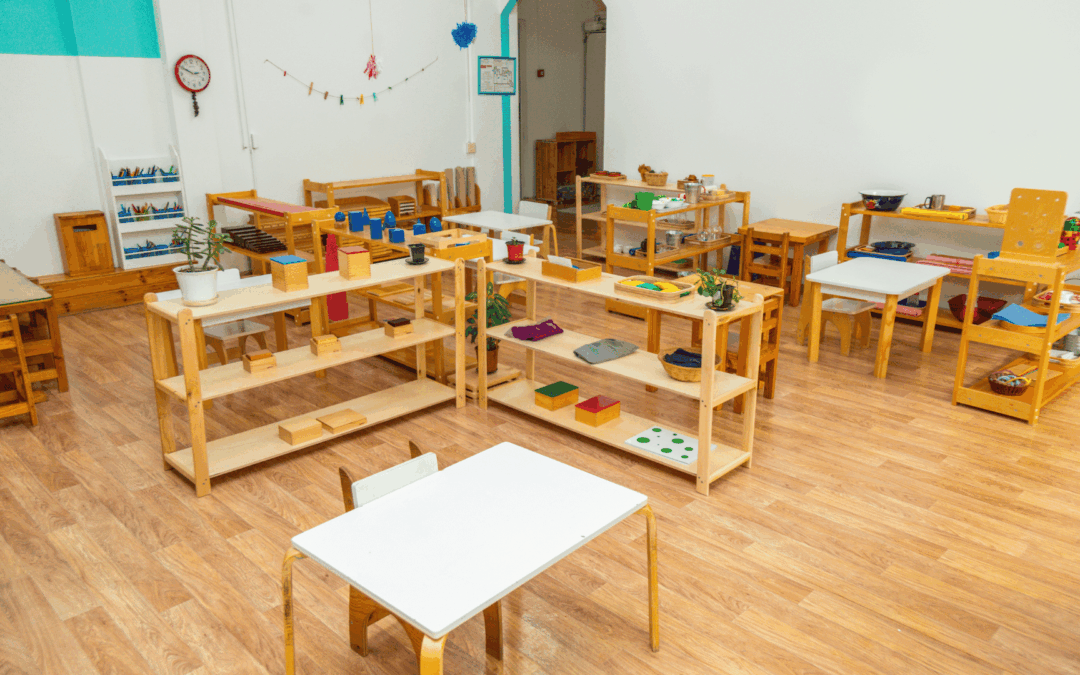
A well-prepared environment is one of the cornerstones of Montessori education, fostering independence, creativity, and a love for learning. Dr. Maria Montessori emphasized that the environment should be carefully designed to meet a child’s development needs, allowing them to explore and learn naturally. This article explores how a prepared environment enhances learning and development in early childhood.
1. What is a Prepared Environment?
A prepared environment is an intentionally structured space that supports a child’s natural curiosity and learning proves. It is designed to be:
- Orderly and organized, providing predictability and a sense of security.
- Accesible and child-centered, allowing children to explore independently.
- Rich in hands-on materials, promoting engagement and skill development.
- Calm and inviting, ensuring that children feel comfortable and motivated to learn.
2. Key Elements of a Montessori Prepared
Environment Freedom Within Limits
- Chidren have the freedom to choose their activites, fostering independence and decision-making skills.
- Boundaries ensure a respectful and structured learning atmosphere.
- Teachers act as guides rather than instructors, encouraging self-directed learning.
Child-Sized Materials and Furniture
- Tables, chairs, and shelves are scaled to the child’s size, promoting self-sufficiency.
- Montessori materials, such as practical life tools and sensory objects, are easily accessible.
- Child-friendly spaces encourage responsibility and self-care routines.
Order and Simplicity
- A structured environment helps children develop concentration and self-discipline.
- Clutter-free spaces allow children to focus on tasks without distractions.
- Everything has a designated place, making it easier for children to maintain order.
Nature and Aesthetics
-
Natural lighting, soft colors, and plants create a calming atmosphere.
- Outdoor access encourages exploration, movement, and sensory experiences.
- Exposure to natural materials, such as wood and fabric, enhances sensory learning.
3. How a Prepared Environment Supports Learning
Encourages Independence
- When children can access materials without adult intervention, they build confidence and autonomy.
- Practical life activites, such as pouring, sweeping, and dressing, strengthen fine motor motor skills and responsibility.
- Self-correcting materials empower children to learn through trial and error without external pressure.
Fosters Concentration and Engagement
- Purposeful activities capture a child’s attention, extending their ability to focus.
- A well-structured space minimizes distractions, supporting deep learning.
- Children develop intrinsic motivation, leading to a lifelong love of learning.
Promotes Social and Emotional Development
- Mixed-age classrooms encourage collaboration, peer learning, and leadership.
- Respectful communication and conflict resolution are modeled in a harmonious environment.
- Children develop empathy and respect for others through shared experiences.
4. Setting Up a Montessori-Inspired Learning Space at Home
Parents can create a Montessori-inspired environment by:
- Decluttering and organizing toys and materials on open shelves.
- Providing real life tools that children can use safely and independently.
- Encouraging self-care stations, such as low hooks for jackets and accessible handwashing areas.
- Incorporating nature, including plants, natural textures, and outdoor playtime.
- Establishing routines, helping children understand expectations and develop self-discipline.
5. The Long-Term Benefits of a Prepared Environment
A thoughtfully prepared environment cultivates lifelong skills such as problem-solving, adaptability and intrinsic motivation. By fostering independence and engagement, children become confident learners prepared to navigate the world with curiosity and resilience. They also develop a strong sense of order and responsibility, which carries into adulthood.
By nurturing these skills early, children are more likely to approach challenges with confidence, seek creative solutions, and thrive in both academic and social settings. Whether at school or home, a prepared environment lays the foundation for lifelong learning and personal growth.
Conclusion
A prepared environment is a fundamental aspect of Montessori education, shaping children into self-directed learners. Whether in the classroom or at home, creating a structured, accessible, and stimulating space empowers children to explore, grow, and develop essential life skills.
